

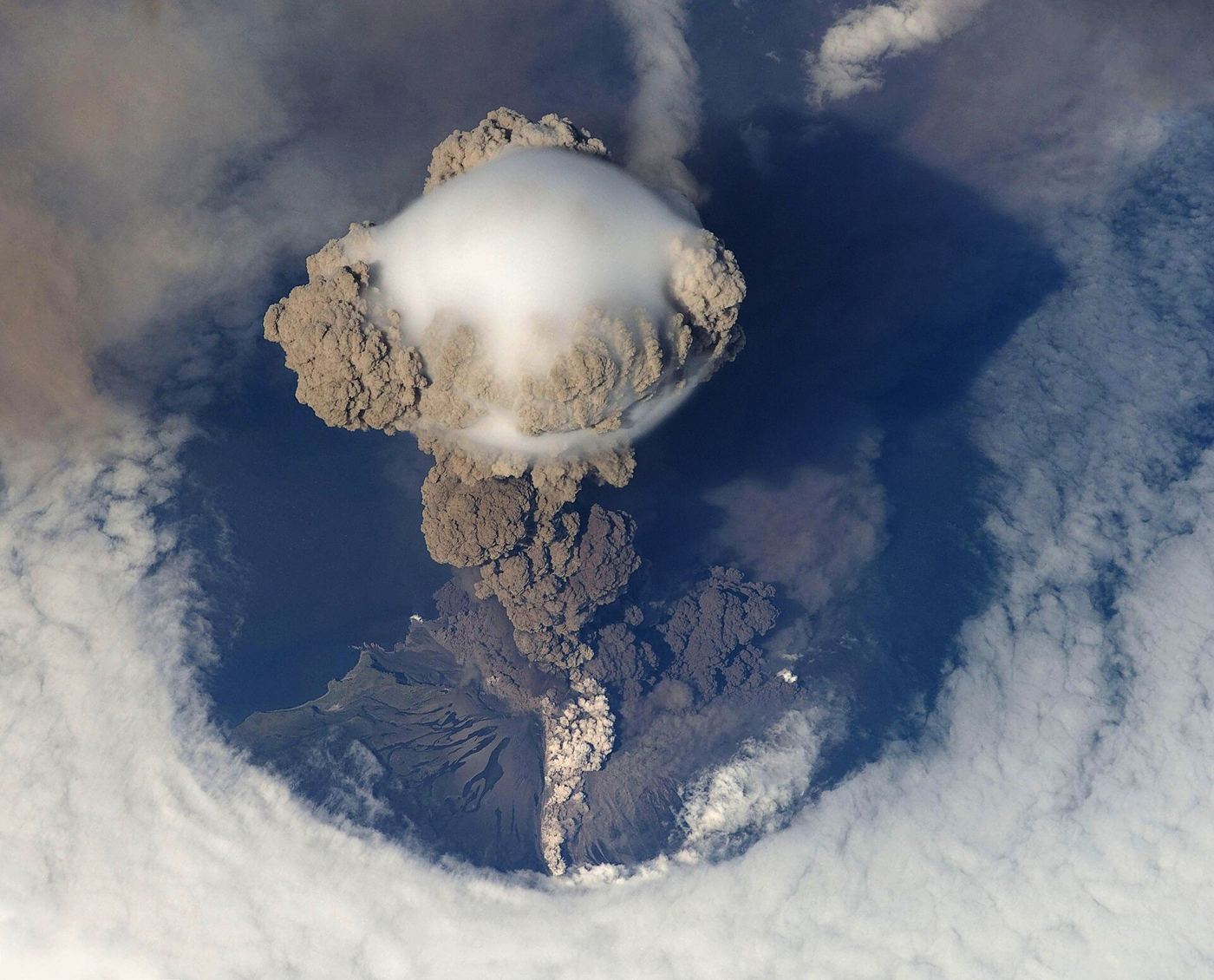
When a volcano erupts, it does more than reshape the landscape around it. The ash cloud rising from the crater can climb high into the atmosphere and drift for thousands of kilometres, carrying fine particles and gases that interact with sunlight and clouds. One of the most important effects is cooling. Tiny sulphur particles in the cloud reflect sunlight back into space, and after large eruptions the effect can be measured worldwide, with average temperatures dipping for a year or more. Smaller eruptions cool only their own region, but even those matter for weather, since the particles can change how clouds form and how much rain falls. Satellites now track these clouds around the clock, measuring their height, spread and composition as they drift. That monitoring matters because the same ash that cools the climate can also damage aircraft engines, close airports and harm the lungs of people living downwind.
What the Evidence Shows
Understanding volcanic ash has become a shared task for volcanologists, climate scientists and aviation authorities. After eruptions that disrupted air travel, agencies built better forecasting systems that predict where an ash cloud will drift and how concentrated it will be, so that flight routes can be adjusted rather than grounded entirely. Researchers are also studying how ash settles on land and sea, since the minerals it carries can fertilise soils and ocean waters, sometimes triggering blooms of plankton that draw carbon from the atmosphere. The picture is complicated by the fact that eruptions differ widely: some produce mostly ash, others mostly gas, and the climate effect depends on how high the material reaches. Scientists say the work has improved steadily, with each major eruption adding to a record that helps predict the next one. For communities living near active volcanoes, that knowledge is practical, turning a frightening event into something that can be prepared for and measured. Reporting and analysis from sources such as National Science Foundation track the same developments, and specialists following the drifting volcanic ash say the direction is now consistent across independent lines of evidence.
The Wider Context
The wider context is a research landscape in which replication and open data now decide reputations. Findings connected to the drifting volcanic ash are being checked by independent groups with shared datasets, and the teams involved publish their methods in full so rivals can test every step. That discipline is slower than a headline cycle, but it is why results in this area increasingly survive first contact with scrutiny.
What Happens Next
What happens next in the story of the drifting volcanic ash will be decided by follow-up work already under way: larger samples, longer observation and instruments that have not yet come online. The researchers involved are unusually united on one point, that the current results justify the next investment of time and money. Readers will not have to wait long for the first tests of that claim. You can follow related developments in our coverage of science.
There is a practical lesson in all of this for readers deciding what to do today. Start with the verified facts, be wary of anyone promising certainty, and prefer reversible steps while the evidence is still developing. Circumstances differ by country, income and personal situation, so general guidance should always be weighed against your own context before you act on it in any significant or lasting way.
