

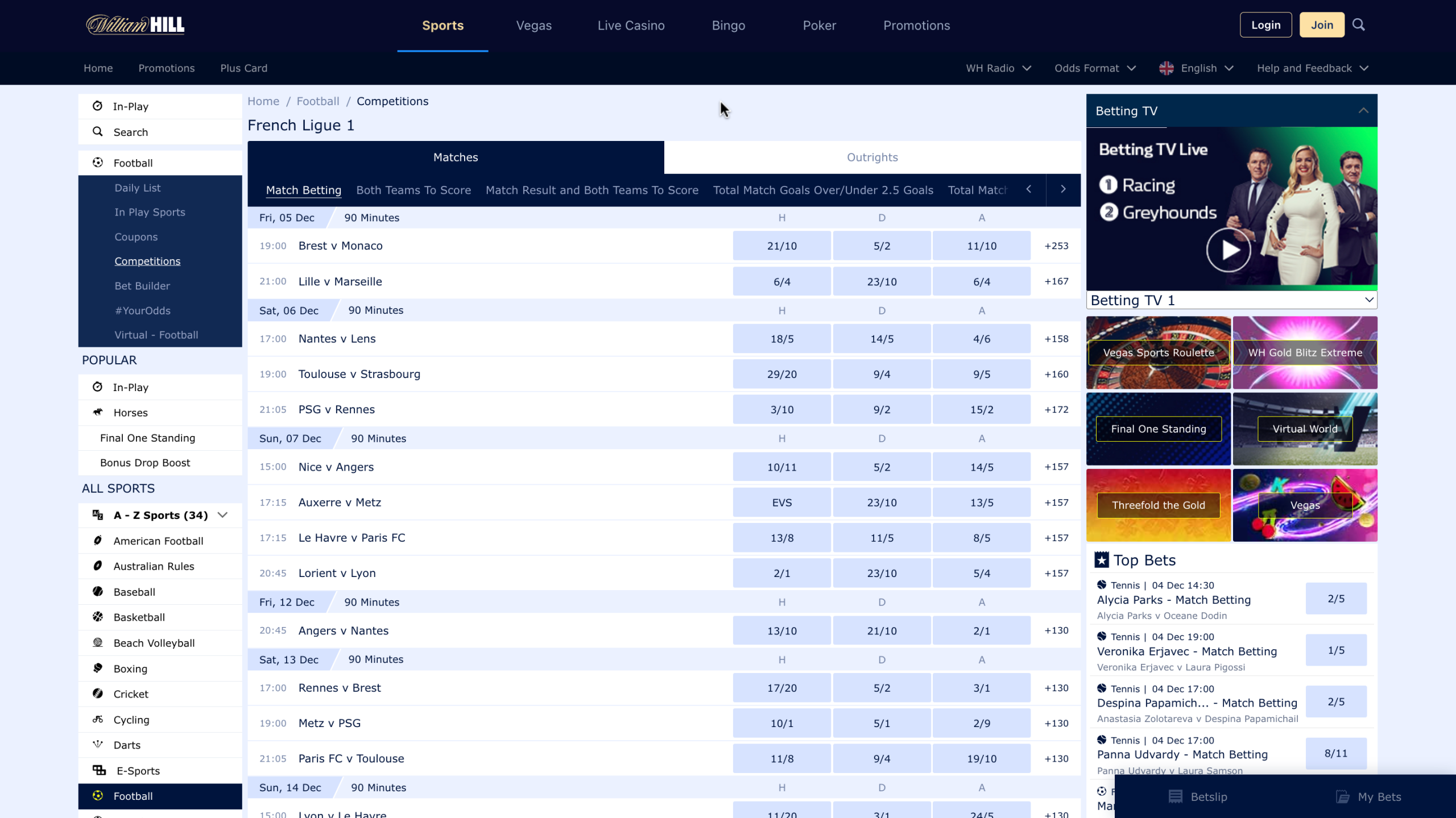
Keeping a structured record of your Ligue 1 2017/2018 bets transforms a season from a blur of wins and losses into a dataset you can analyse and improve on. With 20 teams playing 38 matches each between August 2017 and May 2018, the volume of fixtures was high enough that relying on memory alone almost guaranteed distorted impressions of how well you were really performing.
Why a Personal Ligue 1 Betting Log Matters
A full Ligue 1 season provides hundreds of potential betting spots, and without a log you only remember dramatic wins and painful losses, not the quiet stream of small stakes that often determine your true performance. Because the 2017/2018 schedule ran week after week with few long breaks, any bias in your recollection of form or stake sizing could easily snowball into misjudged confidence or unnecessary caution. A personal record counters that drift by providing hard numbers on which markets you used, what prices you took, and how those choices actually performed, making it possible to adjust strategy based on evidence rather than emotion.
Choosing the Right Perspective for Your Record
Before you design the layout of a log, you need to decide what you are trying to learn from it, because that purpose dictates what you should bother recording. If your goal is bankroll management, then stake size, odds, and running balance sit at the centre; if you care more about value‑based betting, then recording your own estimated probabilities and comparing them with closing prices becomes more important. In the specific context of Ligue 1 2017/2018, where PSG’s dominance and a competitive pack behind them shaped the odds, your log can either emphasise how you handled short‑priced favourites or how you approached more uncertain mid‑table clashes, but trying to capture everything in equal detail usually leads to a bloated sheet you stop updating.
Core Data Fields Every Ligue 1 2017/2018 Log Should Include
To be useful, a personal record must balance detail with sustainability, capturing enough information to reveal patterns without becoming so time‑consuming that you abandon it by mid‑season. At a minimum, each entry for a Ligue 1 2017/2018 bet should specify the match, bet type, stake, odds, and result, along with a short note on your reasoning so that you can later classify whether a loss came from bad luck or a weak idea. Because the league followed a clear calendar, adding the matchday or round number also helps you see whether certain phases of the season—early autumn, mid‑winter, or the run‑in—corresponded with different performance patterns.
Mechanism: How these fields become analysis later
Those basic fields may look simple at the point of entry, but they enable richer analysis once the season ends. Knowing your stake, odds, and outcome lets you calculate return on investment and variance; tracking bet type allows you to group, for example, over/under bets separately from handicaps; and storing reasoning notes helps you revisit specific cases where the logic felt strong even if the result went against you. Over 38 matchdays, these small data points accumulate into a portfolio‑level picture of where your strengths and weaknesses actually lie, which is impossible to reconstruct accurately if you only start thinking about it after the final round.
Using a Structured Table as the Backbone of Your Log
A simple, consistent table makes it easier to record every Ligue 1 2017/2018 bet, whether you maintain it in a notebook, spreadsheet, or database. The columns you choose define the questions you’ll be able to answer later, so it is worth designing them deliberately at the start of the season rather than improvising each week.
| Column name | Purpose in your record | Example entry (Ligue 1 2017/2018) |
| Date / Round | Locate bet within the season timeline | 20 Jan 2018 (Matchday 22) |
| Match | Identify fixture | Lyon vs PSG |
| Market & selection | Classify type of bet and side taken | Over 2.5 goals |
| Odds taken | Capture price you actually received | 1.85 |
| Stake | Track risk in units or currency | 2 units |
| Result | Win / Loss / Push and net profit or loss | Win, +1.7 units |
| Key reasoning | Short note on why you placed the bet | High‑scoring attacks, tired defences |
This structured table solves two common problems: forgetting the context of older bets and failing to understand where the money really went. Over time, scanning the “Market & selection” column may reveal that you over‑rely on totals or favourites, while the reasoning notes can expose patterns such as repeatedly overestimating the impact of recent form or underestimating schedule congestion around European fixtures. Instead of relying on vague impressions that “overs did well this year” or “I always lose on underdogs,” you gain a specific breakdown grounded in the actual bets you made.
Step-by-Step Sequence for Maintaining the Record All Season
Designing a record is only half the battle; the other half is updating it consistently from August to May. The best way to avoid gaps is to link record‑keeping to existing habits in your Ligue 1 routine rather than treating it as a separate, optional chore. For example, you can commit to logging each bet immediately after placement, or to a fixed review session after the last match of every round, so the act of recording never depends on mood.
- Before each matchday, list potential bets in your table with provisional stakes and reasoning, leaving results blank.
- Once bets are actually placed, verify the final odds and stake against your plan and adjust the entry if needed.
- After matches finish, update the result field and net profit/loss, noting any major deviations from expected performance (e.g., missed penalties, red cards).
- At the end of each month, run a quick review of totals by market type and team to see where your money and outcomes are clustering.
- After the season ends in May 2018, use the full log to calculate key metrics like overall ROI, maximum drawdown, and performance by bet category.
This sequence keeps the record alive throughout the campaign instead of turning it into a post‑season reconstruction exercise based on incomplete memories. By updating both before and after matches, you also create a clear distinction between your pre‑match logic and the eventual result, which is essential for avoiding hindsight bias when you evaluate the Ligue 1 2017/2018 season as a whole.
Positioning UFABET Within a Record-Based Approach
Once you commit to tracking every Ligue 1 2017/2018 bet, the choice of where those bets are placed becomes a logistical detail in your log rather than a driver of your thinking. In situations where you sometimes use more than one outlet for French fixtures, it can be analytically useful to add a column for “bet source” and consistently record which environment you used for each ticket. Within that context, if UFABET serves as one of your regular channels, your record helps you compare whether odds quality, bet variety, or limit behaviour differs meaningfully between ufabet168 and any alternatives, without letting the convenience or branding of the service override the cold numbers in your log. Treating the service as one variable in your dataset—rather than the centre of your strategy—keeps the focus squarely on your own decision‑making and results.
Tracking Non-Bet Data Without Overloading Yourself
Besides recording bets, some bettors want to layer in simple performance indicators of the league itself to give context to their decisions. For Ligue 1 2017/2018, external data such as team form, goal averages, or top‑scorer trends can help you interpret whether your bets aligned with how the season actually unfolded. However, trying to manually log full match stats for every game quickly becomes unmanageable, so the trick is to select two or three contextual metrics—like average goals per matchday for your main teams or a running note of major injuries—and keep those in a separate, lighter sheet that you consult during pre‑match analysis.
Keeping Sports Logs Separate from casino online Activity
A betting record only tells the truth if it describes a clearly defined activity, and that requires drawing a firm line between league betting and other forms of gambling. When a single account covers both your Ligue 1 2017/2018 wagers and unrelated games, it becomes difficult to see whether your football decisions were profitable or just masked by variance elsewhere. Maintaining a dedicated log solely for league bets—and treating any spending on a casino online environment as a separate ledger with its own goals—prevents cross‑contamination of results and expectations. This separation ensures that when you review your Ligue 1 record, you are looking at the performance of your analysis and staking on French matches alone, rather than at a blended outcome shaped by different risk profiles and time horizons.
Summary
Creating a personal betting record for Ligue 1 2017/2018 is fundamentally about turning an emotional season into a dataset you can interrogate. By defining a clear purpose for your log, choosing essential fields, and anchoring record‑keeping to regular matchday routines across all 38 rounds, you give yourself the tools to see patterns in stake sizing, market choice, and reasoning that would otherwise remain hidden. Separating that structured record from other gambling activity and treating venues, data sources, and bet types as variables to be measured rather than as identities to be defended allows your Ligue 1 experience to evolve from a series of independent bets into a coherent, evidence‑based strategy you can refine in future seasons.
